
Timing Belt Replacement
Your timing belt/cambelt should be replaced every 40-100,000 miles. Manufacturers have specified the replacement intervals for timing belts. In an interference engine the valves and piston share the same air space, they never touch unless your timing belt snaps or jumps, and this is a catastrophic failure that requires removing the cylinder head and replacing bent valves.
It is one of those jobs that is easy to put off, because everything feels fine until the moment it is not. Planning the replacement on your schedule costs a fraction of what an unplanned failure costs.
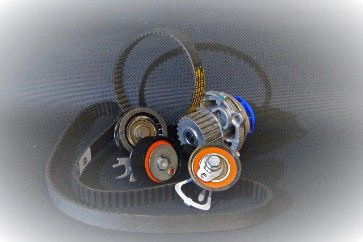
How often should the timing belt be changed?
The answer is always in your manufacturer's service schedule, which is usually based on either mileage or age, whichever comes first. Most cars fall somewhere between 40,000 and 100,000 miles, but some engines run shorter intervals and others stretch further, so it is worth checking the exact figure for your model rather than guessing. If you bought the car used and have no record of the belt ever being changed, it is safest to treat it as overdue. Replacing the belt along with its tensioners and idler pulleys at the same time is the sensible way to do the job, since those parts wear at a similar rate.
Signs your timing belt may need attention
A timing belt rarely fails without warning. Keep an eye (and ear) out for these symptoms:
- A ticking or slapping noise coming from the front of the engine
- The engine misfires or runs roughly
- An oil leak near the timing belt cover
- The engine cranks but will not start
Any of these signs deserve a proper inspection sooner rather than later. We can come to you, check the belt and its covers, and tell you honestly whether it is a quick fix or a replacement job.
What happens if it snaps?
On most modern engines, a snapped timing belt stops the camshaft dead while the crankshaft keeps turning. The pistons then slam into the open valves, bending them and often damaging the cylinder head, and sometimes the pistons too. That kind of repair means removing the cylinder head, machining or replacing it, and fitting a full set of valves. The bill can easily run to several times the cost of a planned belt replacement, and the car is off the road for far longer. If the belt jumps a tooth instead of snapping, you may get misfires and poor running first, which is your last chance to catch it before the damage happens.